Operations on Tree Graphs
Neurons can be represented as centerline skeletons which themselves are rooted trees, a special case of "directed acyclic graphs" (DAG) where each node has at most a single parent (root nodes will have no parents).
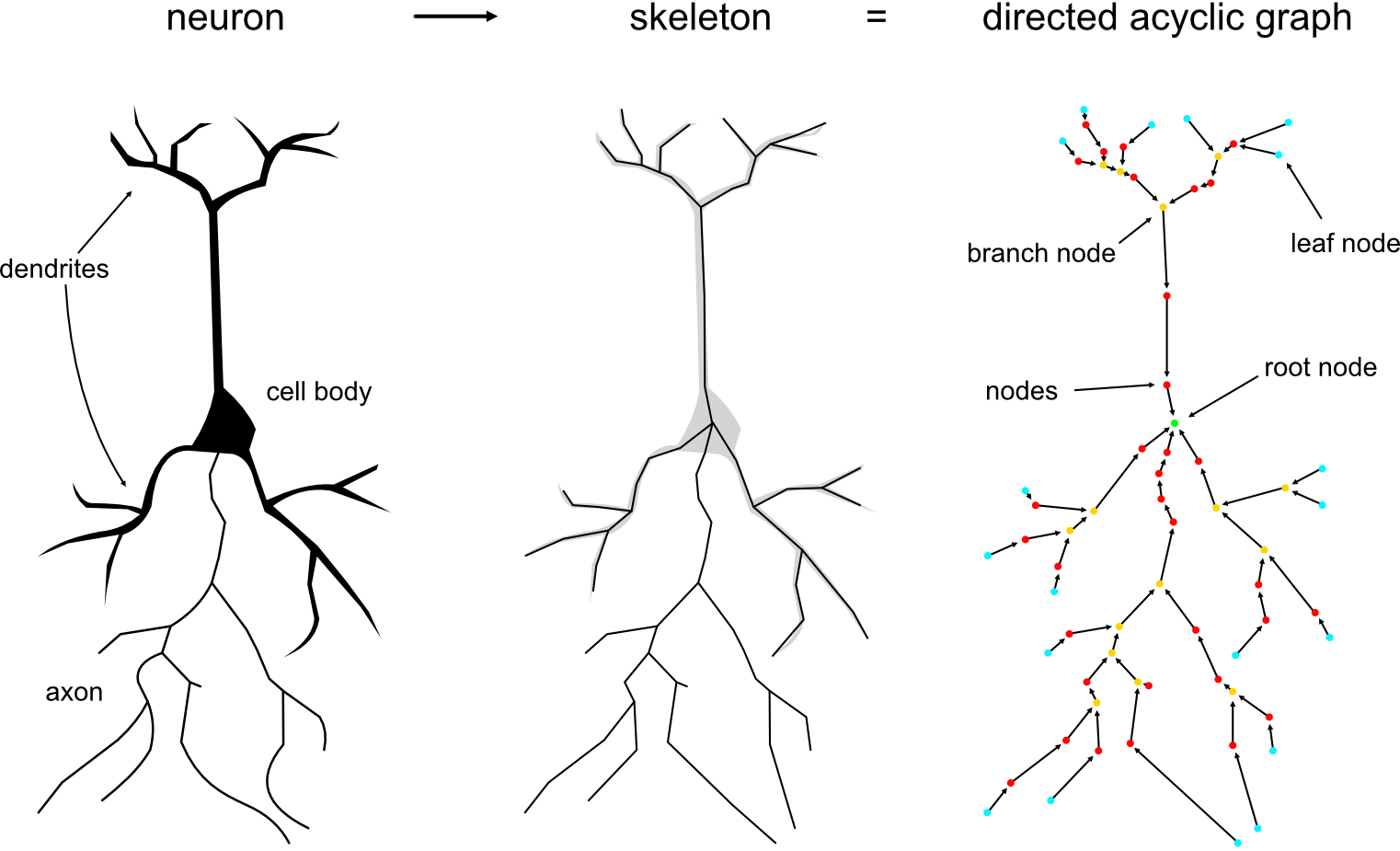
Rooted trees have two huge advantages over general graphs:
First, they are super compact and can, at the minimum, be represented by just a single vector of parent indices (with root nodes having negative indices).
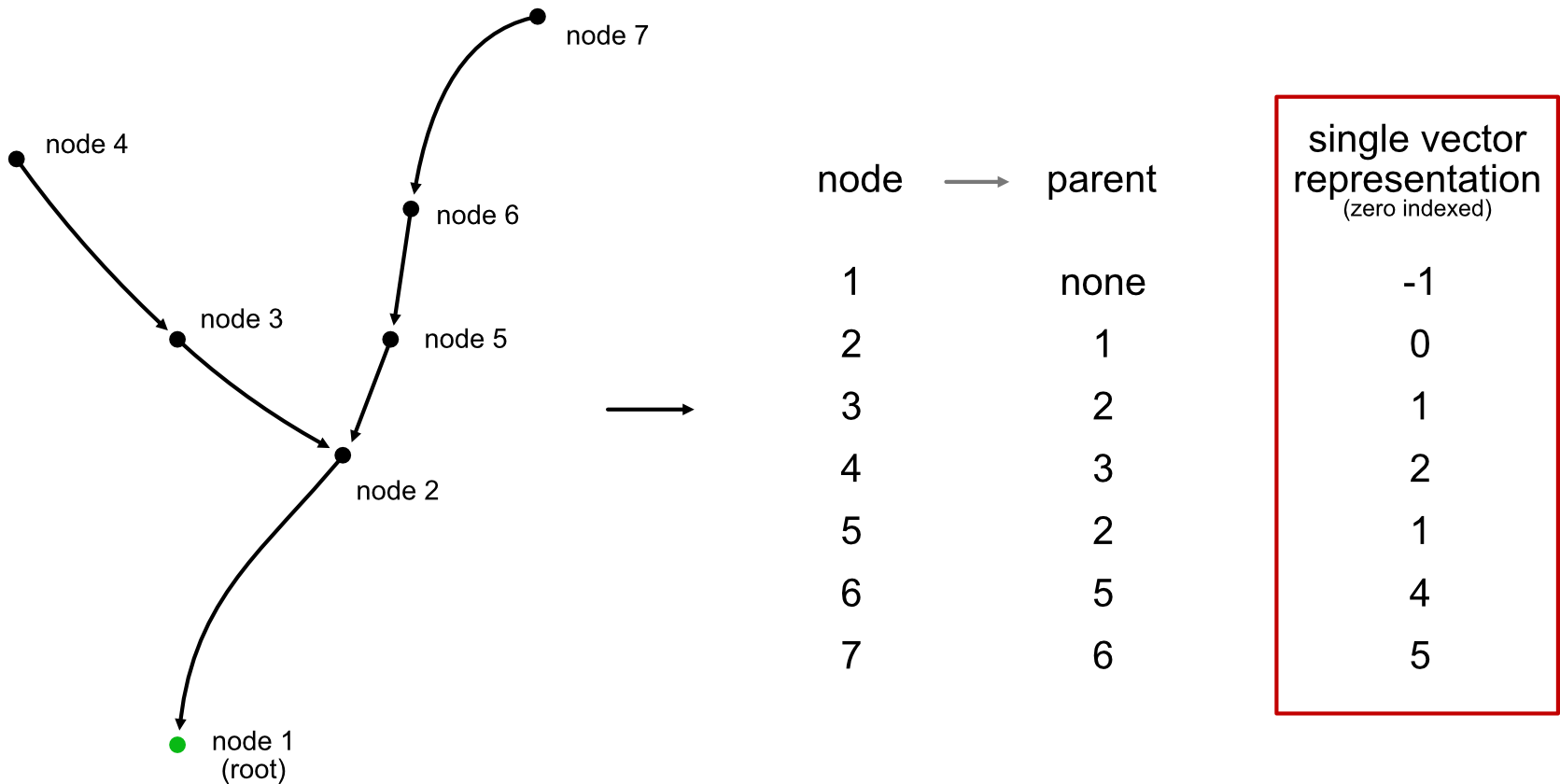
Second, they are much easier/faster to traverse because we can make certain assumptions that we can't for general graphs. For example, we know that there is only ever (at most) a single possible path between any pair of nodes.
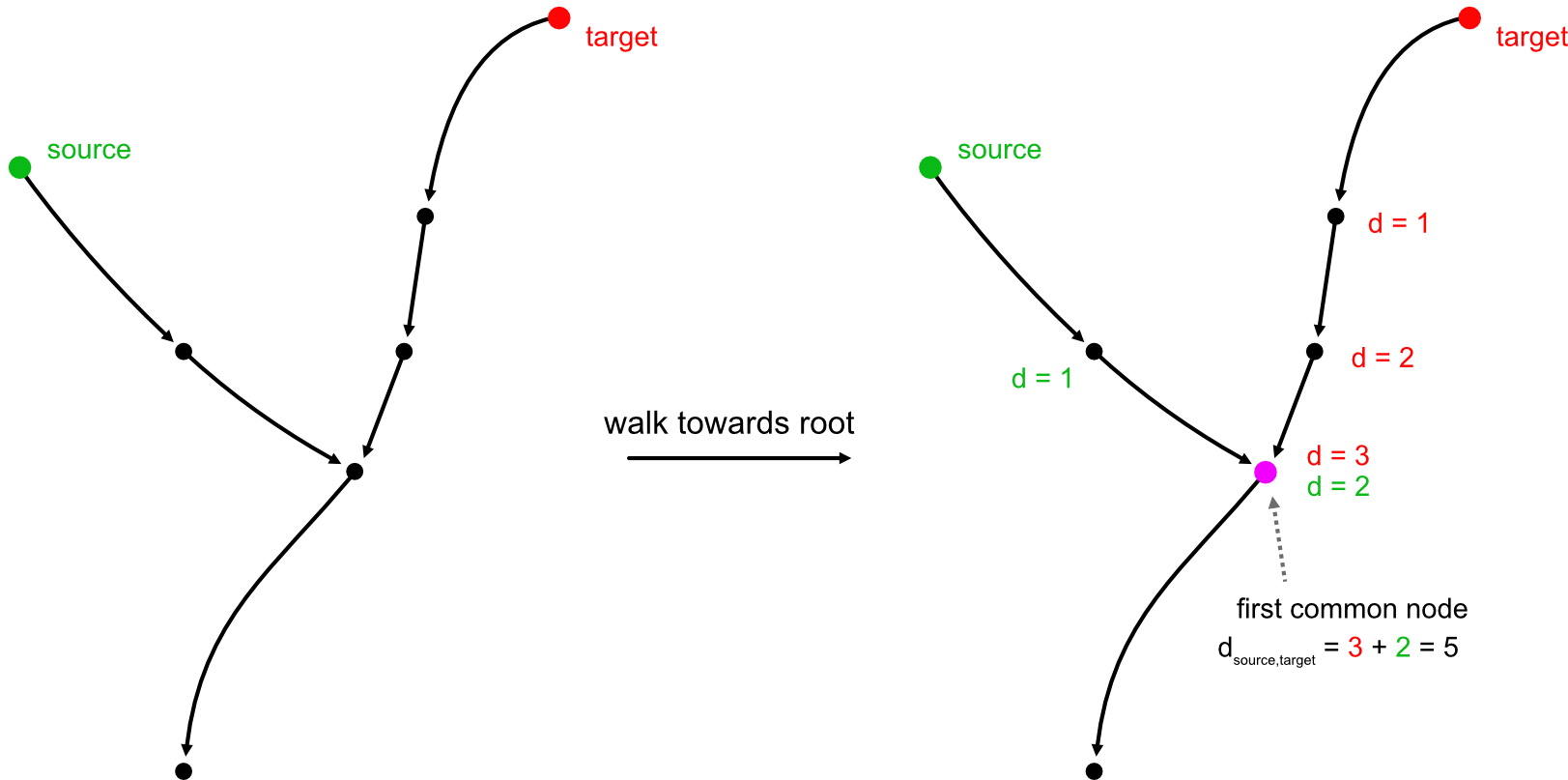
While networkx has some DAG-specific functions they don't
implement anything related to graph traversal.
Representing the tree
All three surfaces ultimately hand the core the same thing — a vector of parent indices — but they differ in how much they do for you:
- Rust (
fastcore::dag) takes the parent-index vector directly, with roots encoded as negative values. - Python (
navis-fastcore) takesnode_idsandparent_idsarrays with arbitrary IDs and maps them to indices internally. - R (
nat.fastcore) takes a parent-index vector you build yourself withnode_indices(ids, parents).
See the capability matrix for which functions each one exposes.